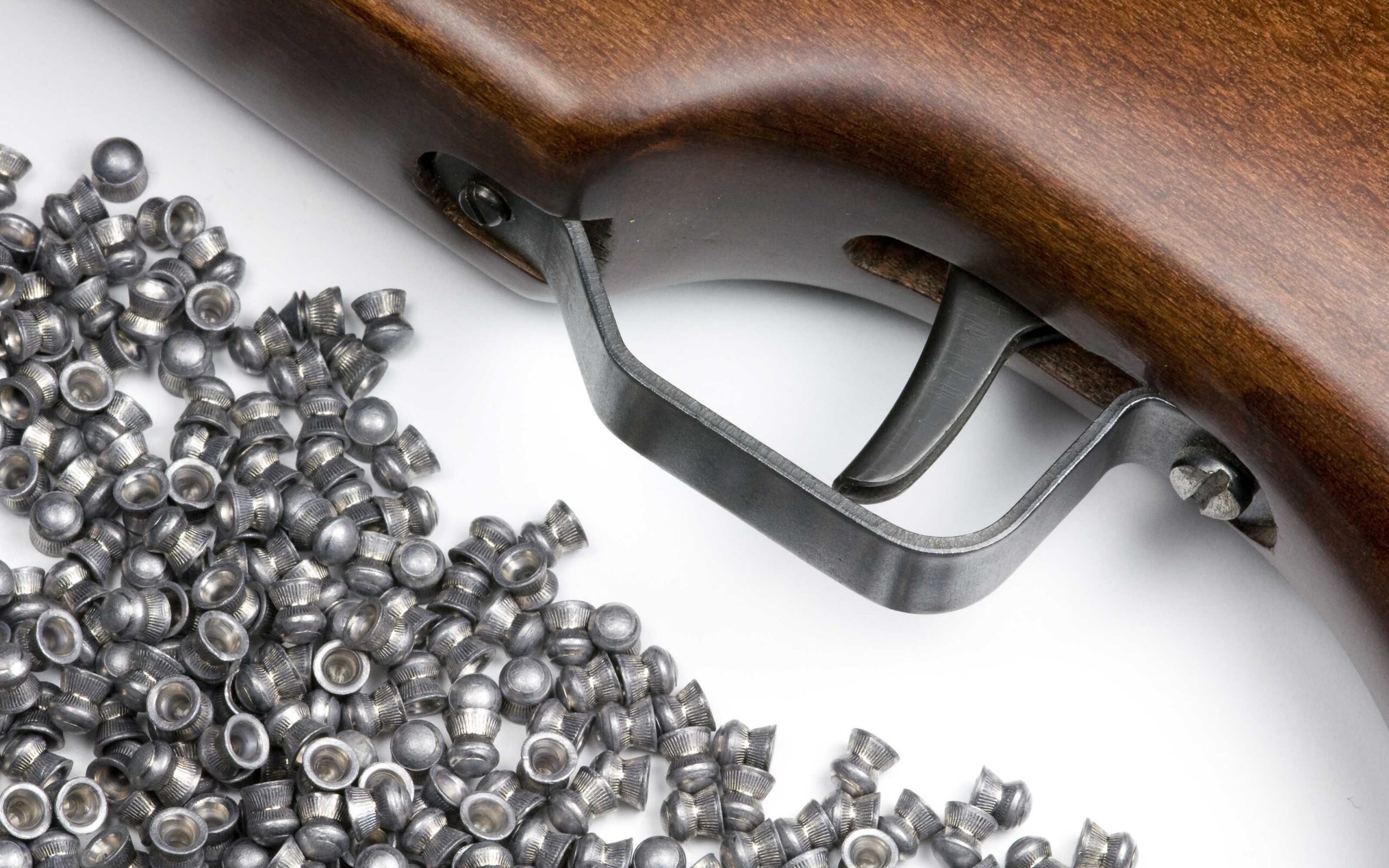
Air rifle pellets are most commonly made from lead or lead alloys, but lead-free pellets made with materials such as tin are also available. Pellet material affects characteristics such as density and weight. Caliber, shape, construction, and manufacturing consistency also influence how a pellet performs.
Quick Answers About Air Rifle Pellets
What are air rifle pellets made of?
Most traditional air rifle pellets are made from lead or lead alloys. Lead-free alternatives can use tin and other material combinations, including specialty designs that use multiple materials.
Why is lead commonly used for air rifle pellets?
Lead has a high density and can be formed into small, detailed shapes. These characteristics make it practical for producing traditional diabolo-style pellets.
Are all air rifle pellets made from the same material?
No. Lead, lead alloys, tin-based materials, and specialty material combinations are used across different pellet designs.
What are the main air rifle pellet types?
Common designs include domed, wadcutter, pointed, and hollow point pellets. The head shape is one of the main differences between these designs.
Are lead-free air rifle pellets available in 2026?
Yes. Current 2026 product specifications show that lead-free pellets are available in several calibers and designs, including options made with tin-based materials. Availability and construction vary by manufacturer and product.
What Are Air Rifle Pellets Made Of?
Air rifle pellets are traditionally manufactured from lead because its physical properties work well for small projectile designs. Lead is relatively dense, which allows a pellet to have useful mass without requiring a large volume of material.
Lead is also soft enough to be formed into the characteristic shapes used by many airgun pellets. Traditional pellets commonly use a diabolo profile, with a head at the front, a narrow waist, and a skirt at the rear.
Modern pellet options have expanded beyond traditional lead construction. Manufacturers now offer lead alloy and lead-free designs, including pellets made with tin-based materials and specialty combinations.
That means the answer to what air rifle pellets are made of is not limited to one material. The material depends on the pellet’s design, intended application, and manufacturer.
Why Has Lead Been Used for Air Rifle Pellets for So Long?
Lead’s usefulness comes from a combination of density and workability.
A dense material can provide substantial mass in a relatively small projectile. This matters because pellet dimensions are limited by the caliber and the design of the air rifle.
Lead is also comparatively easy to shape. Manufacturers can form it into detailed profiles such as rounded, flat, pointed, and recessed heads without requiring a large projectile.
These properties explain why lead has remained a standard material for airgun pellets even as manufacturers have introduced alternatives.
The important point is that lead is not used simply because it is traditional. Its physical characteristics make it well suited to the dimensions and manufacturing requirements of many airgun pellets.
What Is the Difference Between Lead and Lead Alloy Pellets?
A lead alloy pellet is not necessarily made from pure lead. Instead, the lead is combined with other metals to alter specific characteristics of the material.
The exact composition can vary between manufacturers and products. Alloying can be used to change characteristics such as hardness and manufacturing behavior.
This means two pellets that are both described as lead-based may not have identical material properties.
For buyers, the important takeaway is that the word “lead” does not describe every aspect of a pellet’s construction. The manufacturer’s specifications provide more useful information about the particular pellet.
What Are Lead-Free Air Rifle Pellets Made Of?
Lead-free pellets can be manufactured from several material combinations rather than one universal substitute for lead.
Tin is one important material used in lead-free pellet production. Some lead-free pellet designs use tin along with other materials, such as zinc, iron, or plastic, depending on the product’s construction. Tin-based lead-free airgun pellets have also been available for many years.
This is an important distinction because lead-free does not automatically mean tin only. The actual composition depends on the manufacturer’s design and material system.
The density of the material also matters. A lead-free pellet can have a different mass from a lead pellet of the same caliber and similar dimensions.
How Does Material Density Affect an Air Rifle Pellet?
Density describes how much mass is contained within a given volume of material. For pellets, this helps explain why changing the material can change the weight without necessarily changing the caliber.
Consider two pellets with the same nominal caliber. If one uses a denser material, it can have more mass while occupying a similar amount of space.
That difference matters because pellet weight is one of the variables involved in airgun ballistics. Pellet velocity is influenced by the air rifle’s available energy and the pellet’s mass, while ballistic performance is also affected by factors such as pellet shape, mass, and cross-sectional area.
This gives a more useful way to understand pellet materials:
Material affects density, which can influence pellet mass and ballistic behavior.
That relationship is more important than simply labeling one material as “better” than another.
What Does a Pellet’s Caliber Actually Tell You?
Caliber primarily describes the approximate diameter of the pellet. It does not tell you everything about the pellet’s weight, material, head shape, or construction.
Current 2026 lead-free pellet specifications demonstrate that pellet characteristics can vary significantly even within the same general category.
Current 2026 product specifications provide examples of lead-free pellet weights ranging from approximately 5.71 grains in .177 caliber to 9.57 grains in .22 caliber. Other lead-free designs can be substantially heavier, with some .25 caliber options reaching approximately 19.91 grains.
These examples show why caliber alone cannot tell you how heavy a pellet will be.
When comparing pellets, caliber should be treated as one specification within a larger set of measurements.
What Are the Main Air Rifle Pellet Types?
Four common air rifle pellet designs are domed, wadcutter, pointed, and hollow point. These categories are primarily distinguished by the shape of the pellet’s head.
What Are Domed Air Rifle Pellets?
Domed pellets have a rounded head. They are widely used because the rounded profile provides aerodynamic characteristics that make the design suitable for many general shooting applications.
Current 2026 product specifications include domed pellets in .177 and .22 caliber, with examples weighing approximately 10.5 grains and 14.3 grains, respectively.
What Are Wadcutter Air Rifle Pellets?
Wadcutter pellets are commonly used for paper target shooting because their flat front can create a clean, circular hole in the target. Current 2026 product specifications include .177 caliber match-grade wadcutters weighing approximately 8.06 grains.
What Are Pointed Air Rifle Pellets?
Pointed pellets have a tapered nose. The design is distinct from the rounded head of a domed pellet and the flat face of a wadcutter.
Pointed pellets are available in both traditional lead and lead-free constructions. Current 2026 product specifications include pointed .177 and .22 caliber pellets weighing approximately 7.6 and 14.3 grains, respectively.
What Are Hollow Point Air Rifle Pellets?
Hollow point pellets have a recessed area in the front of the head. This creates a different nose profile from domed, wadcutter, and pointed designs.
The specific characteristics of a hollow point depend on its construction and manufacturer. Current 2026 product listings include hollow point designs in .177 and .22 caliber.
How Do Air Rifle Pellet Types Differ From Air Rifle Pellet Materials?
Pellet type and pellet material describe different parts of the product.
Material tells you what the pellet is made from. Type generally describes the pellet’s physical design, particularly its head shape.
For example, a manufacturer can produce a domed pellet using lead or a lead-free material. Likewise, different materials can be used across several pellet shapes.
This distinction is useful because it prevents a common misunderstanding: a pellet’s material and its shape are not the same specification.
|
Specification |
Example |
|---|---|
| Material | Lead, lead alloy, tin-based material |
| Caliber | .177, .22, .25 |
| Head type | Domed, wadcutter, pointed, hollow point |
| Weight | Measured in grains |
| Construction | Single material or specialty multi-material |
| Manufacturing tolerance | How closely individual pellets meet specifications |
Looking at these specifications together provides a much clearer picture of what a particular pellet actually is.
Why Does Pellet Weight Matter More Than Caliber Alone?
Two pellets can share the same caliber and still have noticeably different weights.
Current 2026 product specifications provide a clear example. .22 caliber listings can include a standard domed pellet at 14.3 grains, a copper-coated or copper-based domed design at 14.4 grains, and an ultra-heavy domed pellet at 22 grains.
All three are .22 caliber designs, yet their listed weights are different.
Weight is therefore an important specification to check when comparing pellets. It can influence velocity and trajectory, and it interacts with the air rifle’s muzzle energy and the pellet’s aerodynamic characteristics.
This is one reason simply asking whether a pellet is .177 or .22 does not provide enough information to compare two products.
How Does Pellet Manufacturing Affect Accuracy and Consistency?
Pellet manufacturing quality can affect how consistently individual pellets interact with the barrel and behave in flight. This is why precision pellet production focuses on more than simply producing the correct caliber and shape.
Several dimensions can matter during manufacturing, including head diameter, skirt geometry, weight, and overall uniformity. These characteristics are particularly important when producing pellets intended for precision shooting.
Why Does Head Diameter Matter?
The head is the forward portion of the pellet and interacts with the barrel’s rifling. Consistent head dimensions can help individual pellets engage the barrel in a more predictable way.
A pellet that varies significantly from one unit to another may not interact with the barrel in exactly the same manner each time. This is one reason dimensional control becomes increasingly important for precision-oriented pellets.
Why Does the Skirt Matter?
The skirt is the thinner rear portion of a traditional diabolo pellet. As the pellet is propelled forward, the skirt is designed to engage the bore and help create a seal.
Skirt wall thickness and uniformity can also be important manufacturing considerations for precision pellets. Consistency in this area helps explain why pellet construction matters beyond the visible shape of the pellet.
Why Does Weight Consistency Matter?
Individual pellet weight can vary slightly within a production run. Greater consistency helps make the pellets more predictable from one shot to the next.
Pellet weight variation can influence muzzle velocity and trajectory. This makes weight consistency an important consideration when comparing precision-oriented pellets.
The key takeaway: Pellet quality is not simply about using lead, tin, or another material. The precision with which that material is formed into the finished pellet also matters.
What Makes a Match-Grade Air Rifle Pellet Different?
Match-grade pellets are generally manufactured with tighter tolerances than standard recreational pellets.
The difference is not necessarily a completely different material. Instead, the emphasis is on controlling the dimensions and weight of individual pellets more closely.
Match-grade production places greater emphasis on factors such as head diameter, weight consistency, skirt geometry, and quality control.
Current 2026 product specifications include .177 caliber match-grade wadcutters weighing approximately 8.06 grains, with flat heads designed for paper target shooting.
This provides a useful distinction:
Pellet grade describes manufacturing standards, while pellet material describes what the pellet is made from.
A pellet can therefore be made from a familiar material while still being manufactured to a different level of dimensional consistency.
What Do Air Rifle Pellet Specifications Really Tell You?
An air rifle pellet’s specifications tell you much more than its caliber. To understand how a pellet is constructed, compare its material, caliber, weight, head design, and manufacturing characteristics together rather than treating any single specification as a measure of quality.
For example, current 2026 manufacturer specifications show substantial differences between pellets that share the same caliber. .22 caliber domed pellets can have listed weights of approximately 14.3 grains, 14.4 grains, and 22 grains depending on the specific product.
The same principle applies to lead-free pellets. Current 2026 specifications show lead-free examples weighing approximately 5.71 grains in .177 caliber, 9.57 grains in .22 caliber, and up to 19.91 grains in .25 caliber.
Why Does This Matter When Comparing Pellets?
A pellet’s specifications should be read as a group:
- Caliber tells you the approximate diameter.
- Material tells you what the pellet is made from.
- Weight tells you its mass, usually in grains.
- Head design describes the shape of the front of the pellet.
- Construction describes how the pellet is formed and whether multiple materials are used.
- Manufacturing tolerances indicate how consistently individual pellets meet the stated specifications.
This distinction matters because two pellets can share the same caliber while having different weights, materials, and head designs. Conversely, two pellets can have similar shapes but different material compositions and manufacturing specifications.
What Is the Most Important Specification?
There is no single specification that determines whether a pellet is right for an air rifle. Compatibility comes first, followed by the pellet characteristics that match the intended application.
This is also why comparing pellets by marketing terms such as “premium,” “heavy,” or “match” alone can be misleading. The manufacturer’s actual specifications provide a more useful basis for comparison.
For a more meaningful evaluation, look at the complete pellet specification rather than asking whether one material or pellet type is universally better.
Are Lead-Free Pellets Always Lighter Than Lead Pellets?
Not necessarily.
Material density is an important factor, but the final pellet weight also depends on the pellet’s volume, dimensions, shape, and construction.
A larger lead-free pellet can weigh more than a smaller lead pellet. Even within one caliber, manufacturers can produce pellets with different weights by changing the design.
Current 2026 lead-free pellet specifications demonstrate that pellet weight can vary significantly by caliber and design. Its .25 caliber Baracuda Green weighs 19.91 grains, while its .177 caliber Field Target Trophy Green weighs 5.71 grains. Both are lead-free, tin-based products, but their dimensions and designs are different.
So the more accurate statement is:
Lead-free pellets often have different weight characteristics from comparable lead designs, but material alone does not determine the final pellet weight.
How Should You Compare Different Air Rifle Pellets?
Start with compatibility, then compare the actual specifications.
1. Check the caliber
The pellet must match the caliber specified for the air rifle.
2. Check the material
Determine whether the pellet is lead, a lead alloy, or lead-free.
3. Check the weight
Look at the listed grain weight rather than assuming pellets of the same caliber weigh the same.
4. Check the head design
Identify whether the pellet is domed, wadcutter, pointed, or hollow point.
5. Check the manufacturer’s specifications
Look for information about construction, intended application, and manufacturing quality.
6. Consider consistency
For shooters concerned with repeatable groups, manufacturing consistency can be an important factor.
This approach provides a more complete comparison than simply asking whether one pellet is “better” than another.
What Is the Biggest Difference Between Traditional and Modern Air Rifle Pellets?
The biggest change is the range of materials and manufacturing options now available.
Traditional lead pellets remain widely used. At the same time, manufacturers offer lead-free designs using tin-based materials and other combinations.
Current 2026 product catalogs include both traditional lead pellets and lead-free designs. These newer options demonstrate how tin-based and multi-material construction can be used to produce pellets without traditional lead construction.
The result is a broader range of pellet specifications than the simple lead versus lead-free distinction suggests.
Frequently Asked Questions About Air Rifle Pellets
What are air rifle pellets made of?
Most traditional air rifle pellets are made from lead or lead alloys. Lead-free alternatives can use tin and other material combinations.
What is the most common air rifle pellet material?
Lead remains one of the most widely used materials for traditional air rifle pellets. Manufacturers also offer lead alloy and lead-free alternatives.
Are lead-free air rifle pellets made only from tin?
No. Tin is an important lead-free material, but manufacturers can use other materials and combinations. Some lead-free pellet designs use tin together with materials such as zinc, iron, or plastic.
Does pellet material determine pellet weight?
No. Material affects density, but pellet weight also depends on caliber, dimensions, shape, and construction.
What are the four common air rifle pellet types?
The four common designs are domed, wadcutter, pointed, and hollow point.
Why do some pellets have different weights even when they are the same caliber?
Manufacturers can change the pellet’s material, dimensions, shape, and construction. Current product catalogs show multiple weights within the same caliber.
Final Thoughts
So, what are air rifle pellets made of? Most are made from lead or lead alloys, while modern lead-free options can use tin and other material combinations.
The more useful question is what those materials mean when combined with the rest of the pellet’s specifications. Caliber, weight, head design, skirt geometry, and manufacturing tolerances all help define the finished pellet.
Current 2026 manufacturer specifications show that there is no single standard weight or construction for a given caliber. Understanding these differences helps readers compare pellets based on their actual specifications rather than relying only on marketing terms.
AirFire Tactical provides airgun products and resources for shooters looking to better understand their equipment, pellet options, and related accessories.