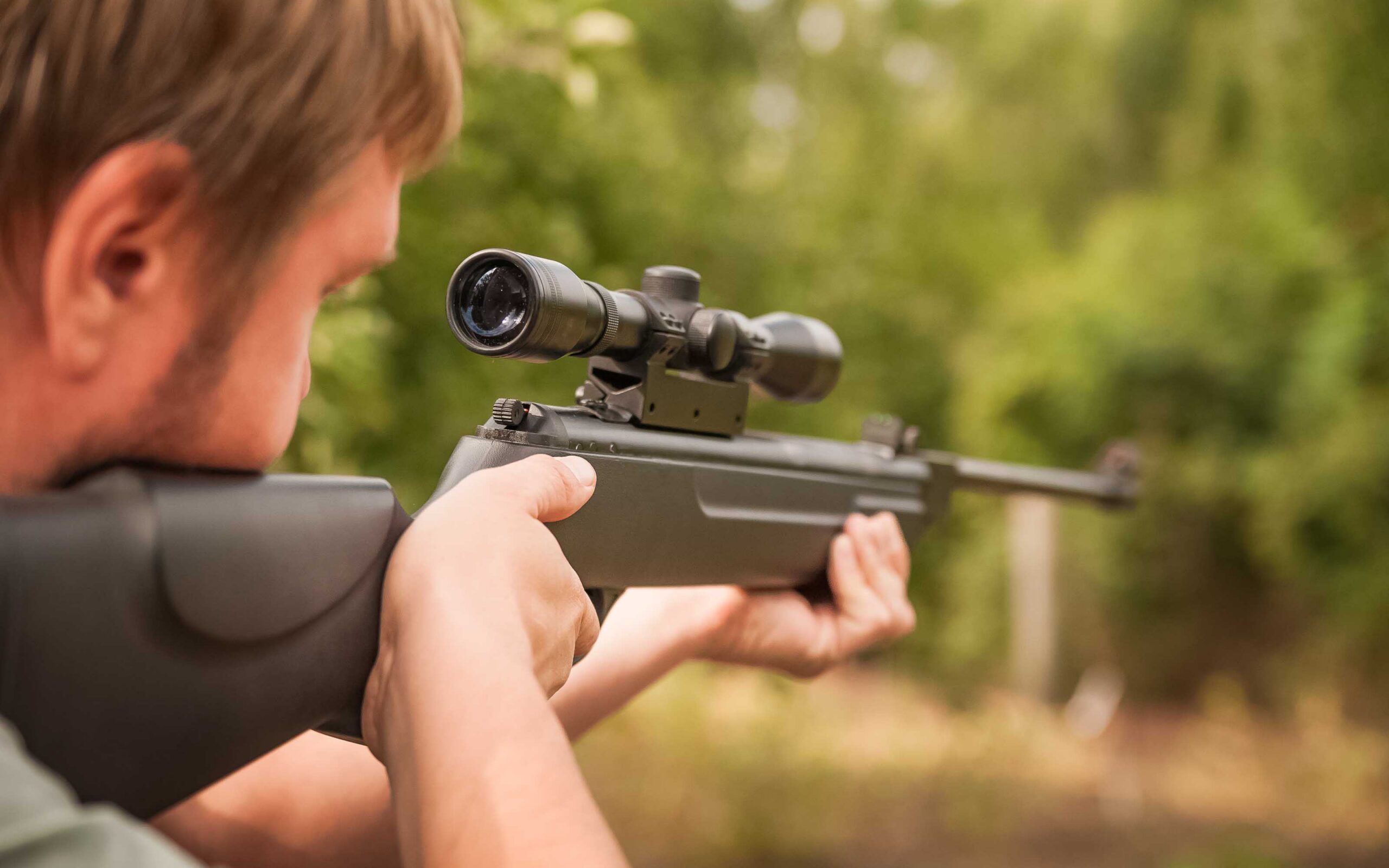
The best air rifle caliber for hunting is generally .22 for small game, while .177 is usually the better choice for formal target shooting and high-volume practice. Larger calibers such as .25 can make sense for certain hunting applications when the rifle has sufficient power and local regulations allow their use.
What Air Rifle Caliber Is Best for Hunting vs Target Shooting?
Choosing an air rifle caliber depends primarily on what you plan to do with it. A caliber that works well for precision target shooting may not be the best option for hunting, because hunting requires the right combination of projectile weight, energy, accuracy, and appropriate game size.
For most target shooters, .177 caliber remains the standard choice. For small game hunting, .22 is often the most practical all-around option. The .25 caliber can provide more projectile weight and energy when paired with a sufficiently powerful rifle, but it also comes with different trajectory and ammunition considerations.
Before hunting, always check your state and local regulations. Legal requirements can vary based on the species, season, location, caliber, rifle type, and required energy.
Why Is .177 Caliber Popular for Target Shooting?
The .177 caliber is the traditional choice for formal air rifle target competition. It is also widely used for recreational shooting because the pellets are generally inexpensive and the caliber offers a relatively flat trajectory at typical target distances.
For someone who plans to spend a lot of time practicing fundamentals, .177 can be an economical choice. Its widespread use also means shooters have access to many types of pellets designed specifically for target shooting.
A key advantage is consistency. Target shooting rewards repeatable accuracy, and a good .177 target rifle paired with quality ammunition can provide the precision needed for disciplined practice and competition.
What makes .177 useful for target practice?
The smaller projectile has several characteristics that make it well suited to target shooting:
- It is the standard caliber for formal 10-meter air rifle competition.
- Pellets are widely available.
- Target-specific pellets are commonly produced in .177.
- Ammunition costs can be relatively low compared with larger calibers.
- The trajectory is well suited to common target shooting distances.
That does not mean every .177 rifle is automatically more accurate than every larger caliber rifle. Rifle quality, ammunition selection, shooter technique, and consistency all matter.
Why Is .22 Caliber Often Considered the Best Air Rifle Caliber for Hunting?
For many small game hunting applications, .22 is considered a practical all-around choice because it offers a useful balance between projectile weight, energy, trajectory, and availability. Current airgun guidance continues to identify .22 as a popular choice for small game hunting.
A .22 projectile is heavier and larger in diameter than a .177 projectile. When used with an appropriately powered air rifle, it can provide greater energy transfer while still maintaining a manageable trajectory.
However, caliber alone does not determine whether an air rifle is suitable for hunting. The rifle’s power, ammunition, accuracy, range, and the size of the intended game all need to be considered.
What makes .22 a good hunting caliber?
The .22 caliber offers several practical advantages for small game applications:
- Heavier projectiles than .177
- Greater potential for energy transfer
- Good balance between trajectory and projectile weight
- Broad availability of pellets
- Compatibility with many hunting-oriented air rifles
Pyramyd AIR’s current airgun guidance describes .22 as a popular small game hunting caliber and notes that the appropriate caliber should be matched with the rifle’s energy and intended game.
Is .25 Caliber Better Than .22 for Hunting?
A .25 caliber air rifle can be a strong option for certain hunting applications, particularly when used with a powerful PCP air rifle. The larger projectile can deliver more energy, but the heavier projectile also produces a more pronounced trajectory and may require more careful range estimation.
This makes .25 less of a universal answer and more of a specialized choice. A shooter who needs additional projectile weight may appreciate .25, while someone who wants a versatile small game rifle may prefer .22.
The rifle’s power is especially important. A .25 caliber rifle with insufficient energy is not automatically more effective simply because the projectile is larger.
How Do .177, .22, and .25 Compare for Hunting and Target Shooting?
| Caliber | Common Use | Main Advantage | Important Consideration |
|---|---|---|---|
| .177 | Target shooting, practice, plinking | Flat trajectory and broad ammunition availability | Less projectile weight |
| .22 | Small game hunting, general shooting | Good balance of energy and trajectory | More pellet drop than .177 |
| .25 | Higher powered hunting applications | Heavier projectile and greater energy potential | More pronounced trajectory and ammunition cost |
These are general comparisons rather than universal rules. Modern PCP air rifles can produce very different performance levels within the same caliber, so looking only at the caliber can lead to an incomplete decision.
What Do .177, .22, and .25 Caliber Mean in Millimeters?
Air rifle caliber refers to the approximate internal diameter of the barrel and the corresponding projectile size. The most common calibers discussed in this guide have simple metric equivalents: .177 is approximately 4.5mm, .22 is approximately 5.5mm, and .25 is approximately 6.35mm.
| Air Rifle Caliber | Approximate Metric Size | General Role |
|---|---|---|
| .177 | 4.5mm | Target shooting and practice |
| .22 | 5.5mm | Versatile shooting and small game applications |
| .25 | 6.35mm | Higher powered applications |
However, caliber does not tell you everything about how an air rifle performs. Two rifles chambered in the same caliber can have very different energy, shot count, velocity, and intended uses. The rifle’s design, power level, barrel, ammunition, and other specifications all influence actual performance.
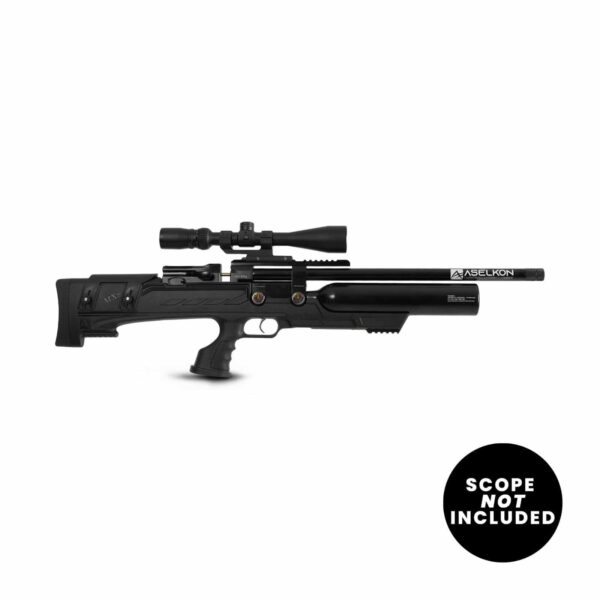
AirFire Tactical’s own PCP rifle specifications demonstrate this difference. For example, the Aselkon MX9 is offered in .177, .22, and .25, with published energy figures of 35, 54, and 62 joules, respectively. The same product page also notes that velocity can vary depending on pellet shape, pellet weight, temperature, altitude, and other environmental conditions.
This is why choosing a caliber based only on an advertised FPS number can give an incomplete picture. A better comparison considers caliber together with the rifle’s intended purpose and published performance specifications.
How Do You Choose the Right Air Rifle Caliber for Your Shooting Goals?
The right air rifle caliber depends on your intended use, shooting distance, rifle power, and the type of target or game involved. Instead of choosing a caliber based only on pellet size or advertised velocity, consider how you plan to use the rifle most often.
A simple way to narrow your options is to start with your primary shooting goal:
| Shooting Goal | Caliber to Consider | Why |
|---|---|---|
| Formal target shooting | .177 | Standard competition caliber with widely available target pellets |
| Recreational target shooting | .177 or .22 | Both offer good accuracy when matched with the right rifle and ammunition |
| Small game hunting | .22 | Provides a useful balance of projectile weight, energy, and trajectory |
| Higher powered hunting applications | .25 | Heavier projectiles can provide greater energy when paired with a suitable rifle |
| One rifle for multiple uses | .22 | Offers a practical balance for recreational shooting and appropriate small game applications |
What if you want one air rifle for hunting and target shooting?
For shooters who want one rifle for both recreational target shooting and lawful small game hunting, .22 can be a practical middle ground. It provides more projectile weight than .177 while remaining versatile enough for target practice.
However, shooters who participate in formal 10-meter competition will generally want .177 because that is the established competition caliber.
The rifle itself also matters. A high-quality air rifle with consistent accuracy and appropriate power can be more useful than simply choosing a larger caliber. Matching the rifle, ammunition, and intended application is the key to getting predictable results.
Before hunting, always verify current local regulations governing permitted species, caliber, minimum energy, seasons, and where air rifles may be used.
Why Does Air Rifle Power Matter When Choosing a Caliber?
Caliber is only one part of air rifle performance. The rifle’s energy, projectile weight, barrel, ammunition, and operating system can all influence how a particular caliber performs.
This is especially important with PCP air rifles because the same caliber can be offered in platforms with very different specifications. AirFire Tactical’s Aselkon MX9, for example, lists different published energy figures for its .177, .22, and .25 configurations.
Velocity should also be interpreted carefully. A higher advertised FPS number does not automatically mean a rifle is more accurate or better suited to a particular application. Pellet weight and other testing conditions can affect velocity measurements, and AirFire Tactical notes that its published velocity figures can vary with pellet shape, pellet weight, temperature, altitude, and other environmental factors.
For that reason, compare the complete rifle specification rather than choosing based on caliber or FPS alone. Look at the manufacturer’s published energy, intended application, ammunition compatibility, and accuracy characteristics.
What Is the Best Air Rifle Caliber for Small Game?
For many small game applications, .22 is a practical starting point because it balances projectile weight and trajectory. However, the correct choice depends on the species, rifle power, shooting distance, ammunition, and local hunting regulations.
Very small game may be appropriate for certain .177 setups where legally permitted and when the rifle provides sufficient performance. Larger small game may call for .22 or .25 depending on the rifle and regulations.
Hunters should always prioritize a legal and humane setup rather than simply choosing the largest available caliber.
Is .177 or .22 Better for Target Shooting?
For formal target shooting, .177 is generally the better choice because it is the standard caliber for recognized 10-meter air rifle competition. For informal target practice, however, either .177 or .22 can work well depending on the rifle and the shooter’s goals.
If you are practicing precision fundamentals, .177 provides an especially straightforward option because of the large selection of target rifles and ammunition available in that caliber.
If you want one rifle for both recreational target shooting and small game hunting, .22 may provide a more versatile compromise.
What Should You Consider Before Choosing an Air Rifle Caliber?
Instead of choosing a caliber based solely on popularity, consider these factors first:
Intended use
Determine whether your primary goal is competition, recreational target shooting, pest control, or lawful hunting.
Rifle power
Look at the rifle’s actual energy output rather than relying only on advertised velocity.
Game size
If hunting is your goal, the intended species should influence your caliber and rifle selection.
Shooting distance
Larger projectiles can have different trajectories. Understanding your rifle’s trajectory is important for consistent accuracy.
Ammunition availability
A caliber that has plenty of compatible ammunition available can be more convenient and economical for regular shooting.
Local regulations
Air rifle hunting laws vary significantly. Check current regulations before hunting, including rules governing permitted species, seasons, caliber, minimum energy, projectile type, and where air rifles may legally be used.
What Does AirFire Tactical’s Experience Show About Choosing Air Rifle Caliber?
Choosing an air rifle caliber requires more than comparing pellet diameter. AirFire Tactical’s own PCP rifle specifications show that caliber can affect published velocity, energy, and magazine capacity, which is why shooters should evaluate the complete rifle rather than selecting a caliber in isolation.
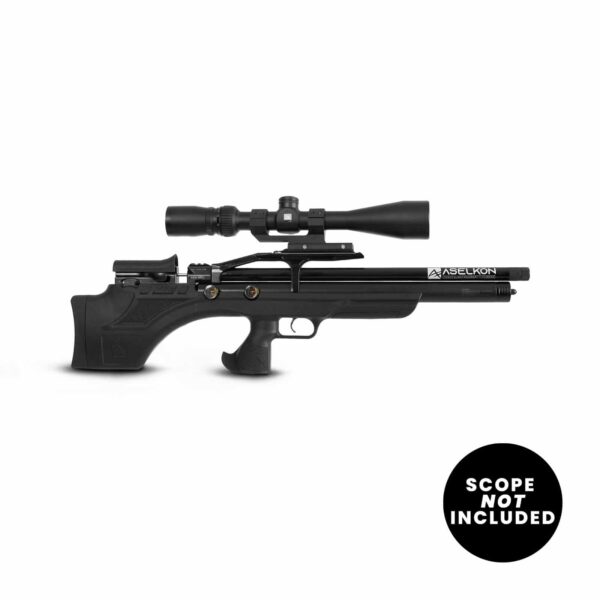
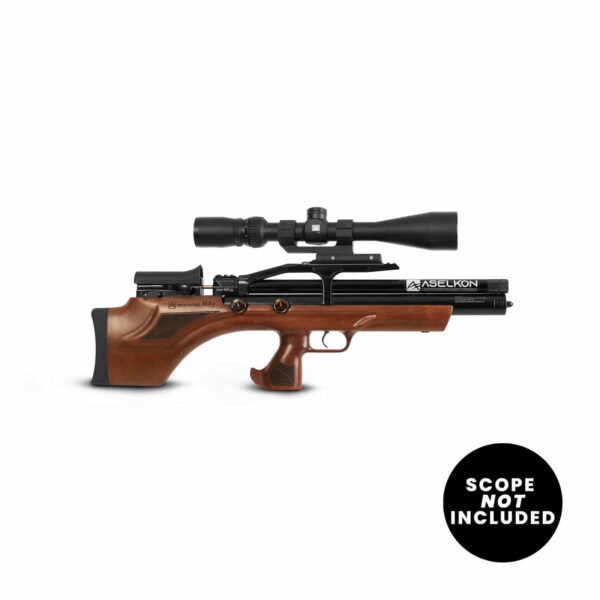
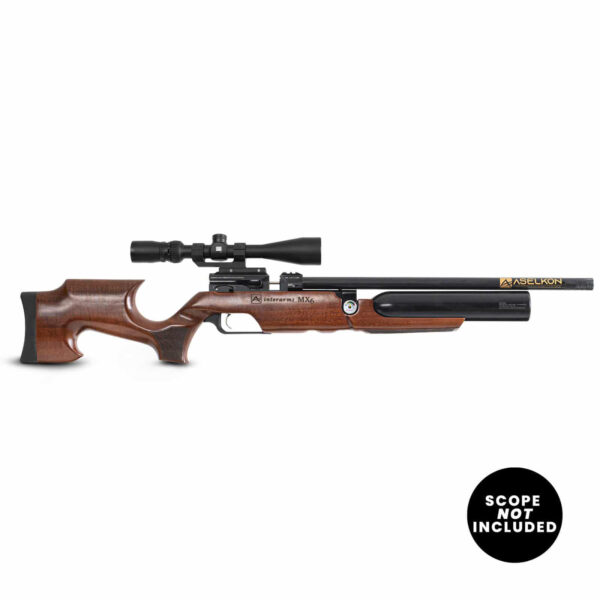
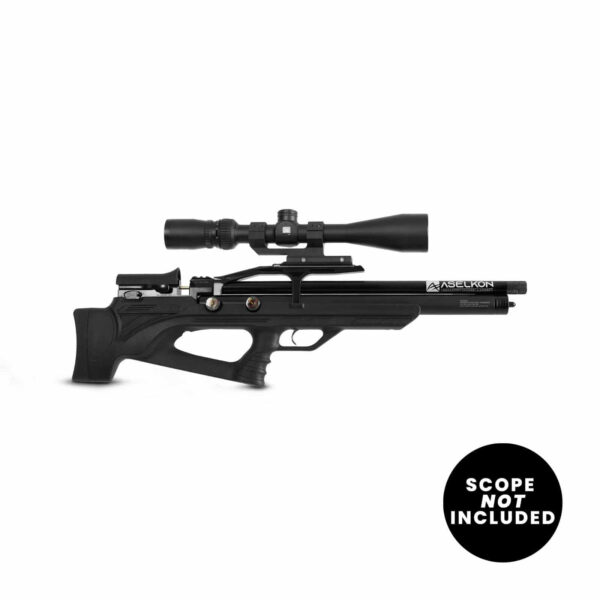
For example, AirFire Tactical’s Aselkon MX6 is offered in .177, .22, and .25 calibers. Its published specifications list 35 joules for .177, 54 joules for .22, and 62 joules for .25, while magazine capacity changes from 14 rounds to 12 and then 10. The listed velocities also change from 1,100 FPS in .177 to 1,000 FPS in .22 and 900 FPS in .25.
The MX9 provides the same useful comparison. AirFire Tactical lists the .177, .22, and .25 versions at 35, 54, and 62 joules respectively, with different published velocities and magazine capacities for each caliber. This shows why a statement such as “a larger caliber is always better” is too simplistic. The caliber is part of a larger performance system.
AirFire Tactical’s own caliber guide also separates caliber selection by shooting purpose. It identifies .177 as a target shooting option, .22 as an all-around choice for pest control and small game, and larger calibers such as .25 and .30 for applications where greater projectile weight and energy are important.
There is also an important distinction between recreational shooting and formal competition. The International Shooting Sport Federation’s current rules specify 4.5mm, or .177 caliber, ammunition for 10m air rifle competition. The 2026 ISSF rules also limit 10m air rifles to 7.5 joules, demonstrating that competition equipment is governed by standards that are very different from higher-powered PCP rifles designed for other applications.
What does this mean when choosing a caliber?
The practical lesson is to match caliber, rifle energy, ammunition, shooting distance, and intended use rather than relying on one specification. AirFire Tactical’s product range illustrates this directly, with multiple PCP platforms available in different calibers and configurations.
For target competition, the .177 standard is clear. For other applications, the choice becomes more dependent on the rifle and the shooter’s goals. A .22 or .25 rifle should therefore be evaluated according to its actual specifications and intended application, not simply because the projectile is larger.
That approach gives shooters a more informed way to compare air rifles and explains why there is no single caliber that is best for every type of shooting.
Which Air Rifle Caliber Should You Choose?
If your primary goal is formal target shooting, .177 is usually the most logical choice because it is the established competition caliber and offers a wide selection of target ammunition.
If your primary goal is small game hunting, .22 is often the most versatile option because it provides a useful balance between projectile weight, energy, and trajectory.
If you are considering a powerful PCP air rifle for hunting applications that require more projectile weight, .25 may be worth considering. The right choice still depends on the rifle’s actual performance, intended game, and applicable laws.
For shooters who want one caliber that can handle both recreational target shooting and appropriate small game applications, .22 can provide a practical middle ground.
Frequently Asked Questions About Air Rifle Calibers
Is .22 the best air rifle caliber for hunting?
For many small game hunting applications, .22 is considered one of the most versatile choices. It provides more projectile weight than .177 while maintaining a more manageable trajectory than larger calibers. The rifle’s energy and local regulations still need to be considered.
Is .177 or .22 better for target shooting?
.177 is generally the better choice for formal target shooting because it is the standard caliber used in 10-meter air rifle competition. For recreational target shooting, either caliber can work depending on the rifle and distance.
Is .25 caliber too powerful for small game hunting?
Not necessarily. .25 caliber can be appropriate for certain hunting applications when paired with a properly powered rifle and used within applicable regulations. Its heavier projectile can provide more energy, but it also has a more pronounced trajectory than smaller calibers.
Does a higher FPS mean an air rifle is better for hunting?
No. Velocity is only one part of air rifle performance. Projectile weight, energy, accuracy, rifle design, ammunition, and the intended game all matter. A higher advertised FPS number does not automatically make an air rifle suitable for hunting.
Can you hunt with any air rifle caliber?
No. Whether an air rifle can legally and ethically be used for hunting depends on local regulations, the species being hunted, the rifle’s performance, and the applicable hunting requirements. Always check current regulations before hunting.
Final Takeaway
The best air rifle caliber depends on what you plan to do. For formal target shooting, .177 remains the standard choice, while .22 is often the most versatile option for lawful small game hunting. A powerful .25 can have a place in specialized hunting applications, but choosing the right rifle requires looking beyond caliber alone.
The most important factors are the rifle’s actual performance, appropriate ammunition, intended use, shooting distance, and local regulations. Airfire Tactical can help you understand the differences between air rifle calibers so you can choose a setup that fits your shooting goals and experience level. Choosing the right caliber for your intended activity is more important than simply choosing the biggest or fastest air rifle available.